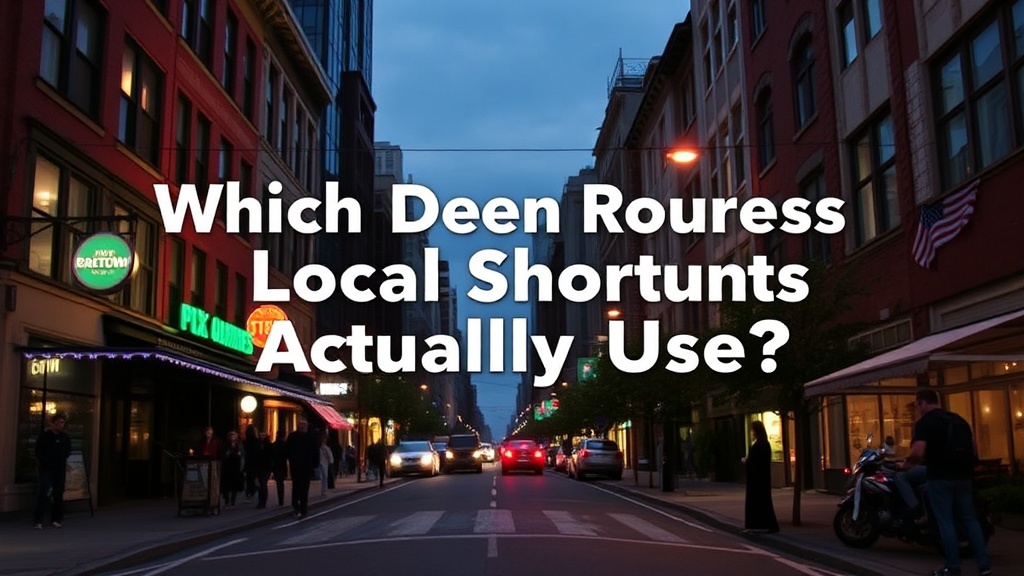
Which Hidden Routes and Local Shortcuts Do Gastown Insiders Actually Use?

Most people don't realize that nearly 40% of Gastown's walkable pedestrian corridors aren't on the main streets at all—they're tucked into the laneways, alleys, and covered passages that run between Water Street and the parallel blocks. For those of us who actually live here, knowing these routes isn't about sightseeing. It's about getting home with your groceries before the ice cream melts, avoiding the crowds that bottleneck around the Steam Clock, and finding a moment of quiet on your daily commute.
This neighbourhood wasn't built for modern foot traffic—it grew organically from a 19th-century frontier town into the densest residential pocket in downtown Vancouver. That history means our streets follow patterns that can frustrate newcomers but offer genuine advantages once you learn them. Here's what experienced Gastown residents know about moving through our neighbourhood efficiently.
Why Do Locals Avoid Water Street During Peak Hours?
Water Street gets the attention—it's where the tour buses unload, where the souvenir shops cluster, and where you'll find yourself stuck behind groups taking photos of the Steam Clock. But for daily life? Most of us treat it as a last resort rather than a main route.
The smarter north-south path runs through Trounce Alley. This narrow passage—barely wide enough for two people to pass comfortably—connects Water Street to Cordova Street with zero traffic lights and none of the sidewalk congestion. You'll find locals using it during lunch hours, parents with strollers taking the quicker route to the daycare near Maple Tree Square, and residents carrying groceries home from Nesters Market on Abbott Street.
Trounce Alley isn't just faster—it's also where you'll notice some of Gastown's most interesting architectural details that most tourists miss. The brickwork on the eastern wall dates to 1906, and if you look up, you can still see the original iron fire escapes that were mandated after the great fire of 1886. These details matter because they remind us that our neighbourhood's history isn't just preserved in museums—it's embedded in the infrastructure we use every single day.
Which Back Alleys Offer the Fastest North-South Routes?
Blood Alley gets the dramatic name and the tourist attention, but locals know the real utility corridors are the less famous passages. Gaoler's Mews—a narrow lane running between Carrall Street and Powell Street—offers the quickest connection between the residential blocks and the transit hub at Waterfront Station. During rush hour, it can save you five minutes compared to walking the main sidewalks.
The alley running behind the buildings on the south side of Water Street (technically unnamed on most maps but locally called "Back Street" by some old-timers) connects several residential entrances and offers covered sections during rain. It's not glamorous—there are dumpsters and service entrances—but it's practical. You'll see delivery drivers from AAA Fine Foods using it, residents walking their dogs, and the occasional film crew setting up equipment away from the main thoroughfare.
Cordova Street itself has become more pedestrian-friendly since the city removed some parking spaces to widen sidewalks, but the real secret is the network of covered walkways that connect several heritage buildings. The passage through the Flack Block building (at the corner of Cambie Street) lets you cut through from Cordova to Hastings while staying indoors during winter weather. These aren't officially public in all cases, but they're used routinely by residents who've learned which lobbies allow through-traffic.
Where Can You Find Quiet Spots for a Quick Break?
Living in Gastown means accepting density. There aren't many parks within the neighbourhood boundaries—Blood Alley Square is tiny, and the recently reopened
Despite the density, there are pockets of relative quiet if you know where to look. The courtyard behind the Vancouver Police Museum on Cordova Street is open to the public during museum hours and offers benches that are rarely occupied. It's not a secret garden, but it's a place to sit and make a phone call without competing with street noise.
The atrium in the Woodward's building (technically in the Downtown Eastside but on the eastern edge of Gastown) provides indoor seating and sometimes hosts community events. More locals are using the raised plaza areas near the new developments on Abbott Street—these spaces weren't designed as parks, but they've become de facto gathering spots for residents who live in the surrounding condos.
Perhaps the most overlooked quiet space is the small plaza at the corner of Water and Cambie Streets, adjacent to the Salt Building. It's exposed to the elements, but it's positioned such that most tourist foot traffic flows past it rather than through it. On a weekday afternoon, you can often find a spot on the concrete ledges without having to fight through tour groups.
What Heritage Details Should Residents Look For on Side Streets?
Understanding our neighbourhood's layout means understanding its history. Gastown's street grid predates Vancouver's official incorporation—the city was built around this settlement, not the other way around. That's why the blocks don't align perfectly with the compass, and why some alleys follow property lines that were drawn in the 1880s.
The cobblestones on Water Street aren't original (they were replaced in the 1970s during the neighbourhood's first major revitalization), but the granite curbs on many side streets are genuine 19th-century infrastructure. Look down when you're walking Carrall Street between Powell and Cordova—you'll see the wear patterns from decades of wagon wheels and, later, streetcars.
The building at 1 Powell Street, now home to residential units and ground-floor retail, still has its original freight elevator accessible from the alley. It's not open to the public without permission, but the mechanism is visible from the exterior loading dock. These industrial remnants matter because they explain why certain alleys are wider than others—they were designed for horse-drawn delivery wagons, not modern garbage trucks.
Pay attention to the sidewalk stamps on Cambie Street, particularly near the intersection with Water. The concrete still bears the impressions of the contractors who poured it in the 1920s and 1930s—a small detail, but one that connects our daily walks to the workers who built this city. The City of Vancouver's heritage conservation program maintains records of these details, and understanding them helps residents advocate for preservation when development proposals come before council.
How Can New Residents Learn These Routes Quickly?
There's no substitute for time spent walking, but there are ways to accelerate your learning curve. The first rule: don't rely solely on Google Maps. The mapping algorithms prioritize vehicle traffic patterns and don't account for the pedestrian-only passages that locals use routinely. They also don't know which alleys feel safe after dark and which ones are best avoided.
Talk to your neighbours. Gastown has a surprisingly tight-knit residential community despite the transient tourist population. Building managers, corner store clerks, and the regulars at JJ Bean on Water Street are usually happy to share route advice. Join the Gastown Business Improvement Area email list—they send updates about construction closures and temporary pedestrian detours that affect daily routes.
Pay attention to where the delivery drivers walk. They're the real experts on efficient routes—they know which alleys connect where, which doors are unlocked during business hours, and which paths stay dry during rain. Watch the patterns of people carrying grocery bags from Nesters or Urban Fare. They're not taking the scenic route—they're taking the efficient one, and you can learn by following their example.
Finally, explore during off-peak hours. Sunday mornings before 10 AM offer a completely different perspective on the neighbourhood than Friday evenings. The alleys that feel sketchy at midnight are often just quiet and empty at 8 AM. Learn both versions of your route—the daytime path and the after-dark alternative—and know when to use each one.
Why Do These Routes Matter for Community Life?
Knowing the back ways through Gastown isn't just about personal convenience. It's about participating in the neighbourhood's actual life rather than just its tourist-facing facade. When you cut through Trounce Alley regularly, you start recognizing the other regulars. You learn which doorways offer shelter during sudden rain. You notice when something changes—a new mural, a closed business, a security concern.
These patterns of movement shape how we experience community. The main streets belong to everyone (and no one), but the alleys and shortcuts develop their own rhythms. The woman who walks her Boston Terrier through Gaoler's Mews every morning at 7:30. The bike courier who knows exactly which passages accommodate a trailer. The elderly resident who takes the covered route through the Flack Block during winter because his hip bothers him in the cold.
Gastown's character has always been defined by these in-between spaces—the narrow lots, the service lanes, the gap-toothed street frontages where buildings burned down and were replaced at different times. Our walking routes follow the same logic. They respect the neighbourhood's organic growth rather than trying to impose a grid on top of it.
The tourists will keep following the painted lines on the sidewalk, queuing for photos, and clustering around the Steam Clock. That's fine—they keep the local economy running. But for those of us who call this neighbourhood home, the real Gastown is in the shortcuts, the alleys, and the quiet routes that only reveal themselves with time. Learn them, use them, and claim your place in the neighbourhood's daily rhythm.